The Rise of a 'Fentanyl Kingpin'
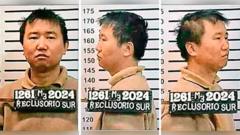
The global illicit drug trade, particularly involving synthetic opioids like fentanyl, often relies on complex international networks. Central to these operations are individuals who bridge the gap between chemical manufacturers and criminal organizations. One such figure, identified by U.S. authorities as Zhang Zhidong, a 39-year-old Chinese national, has been accused of playing a pivotal role in establishing and maintaining a critical supply chain for fentanyl precursors from China to Mexican cartels. Zhang, known in criminal circles as 'Brother Wang,' is currently awaiting trial in the United States on charges including drug trafficking and money laundering.
Fentanyl, a synthetic opioid significantly more potent than heroin, is responsible for tens of thousands of deaths annually, predominantly in the U.S. Its lethal potential, even in minute quantities, has led to its classification as a major public health and security threat. The U.S. government has intensified efforts to combat fentanyl trafficking, with officials describing alleged figures like Zhang as among the world's most dangerous traffickers.
From Academia to Alleged Illicit Enterprise
Zhang Zhidong's journey to becoming an alleged central figure in the fentanyl trade is, according to various accounts, a circuitous one. A graduate of the prestigious Peking University, where he studied Spanish, Zhang initially moved to Mexico in 2011 to work for a Chinese-owned iron ore mining company. Contemporaries describe him as a bright, resourceful individual with exceptional Spanish language skills and a knack for navigating complex social and business environments, including interactions with the local underworld.
After the mining company's collapse in 2013, Zhang remained in Mexico. According to a former university colleague, he began engaging in activities that suggested money laundering. Simultaneously, sources within the Sinaloa cartel claim Zhang deepened his involvement in drug-related activities, reportedly leveraging a romantic relationship with a relative of a cartel leader to gain access to the organization's inner circle. U.S. court documents allege that Zhang had been operating a significant narcotics trafficking and money laundering enterprise since June 2016.
The Fentanyl Supply Chain: A Closer Look
The alleged role of individuals like Zhang Zhidong is crucial in the international fentanyl trade. Cartel members describe how Zhang would facilitate orders for precursor chemicals from China, utilizing his network of contacts. These chemicals would then be shipped to Mexico, often by air or sea, and subsequently distributed to clandestine laboratories within Sinaloa. In these labs, individuals referred to as 'fentanyl cooks' would process the precursors into the final product. The dangers inherent in this process are stark; one cartel member, who worked as a cook, reported witnessing multiple deaths due to exposure to the toxic substances.
The ease with which these precursor chemicals can be obtained from China is a recurring theme. While many of these chemicals have legitimate industrial uses and are regulated, they are not universally banned in China. This regulatory landscape, coupled with the vastness of China's chemical industry, creates opportunities for illicit diversion. Researchers specializing in the flow of precursor chemicals into Mexico emphasize the critical role played by brokers like Zhang, who possess the unique ability to connect Mexican trafficking organizations with Chinese suppliers and manage the complex logistics across multiple continents.
Global Reach and Financial Operations
Mexican security agencies have indicated that Zhang's alleged operations extended across the Americas, Europe, China, and Japan. He is accused of being responsible for the export and distribution of substantial quantities of cocaine, fentanyl, and methamphetamine, and for handling over $150 million in annual drug proceeds. The U.S. Department of Justice detailed how Zhang allegedly recruited individuals to open bank accounts for more than 100 shell companies, facilitating the laundering of millions in drug money by depositing funds collected in the U.S. and wiring them to beneficiary accounts outside the country.
China, being a leading global producer and exporter of precursor chemicals, faces ongoing challenges in controlling their diversion. Despite efforts to implement stricter controls, a 2025 U.S. State Department report highlighted that oversight remains inadequately staffed and equipped. The Chinese embassy in Washington, however, maintains that China is among the world's most stringent countries in counternarcotics efforts, noting that all fentanyl-related substances have been tightly controlled since 2019. The embassy also emphasized productive counternarcotics cooperation with the U.S.
Arrest, Escape, and Extradition
Zhang's alleged involvement in the drug trade came to international attention following his arrest in Mexico in October 2024. Despite being placed under house arrest, he reportedly escaped and attempted to flee to Cuba and then Russia. Russian border officials detected forged documents, leading to his return to Cuba, which subsequently extradited him to Mexico, and finally to the United States. His arrest sent ripples through the alumni network of Peking University, where he had once been a student.
The absence of figures like Zhang in the supply chain can have an immediate impact. Cartel members in Culiacán noted the sudden difficulty in obtaining precursors after his arrest, highlighting his crucial role in maintaining connections with Chinese suppliers. This disruption was corroborated by U.S. Drug Enforcement Administration observations of a decline in fentanyl purity, suggesting challenges for Mexican-based fentanyl cooks in acquiring key precursor chemicals. However, experts caution that such disruptions are often temporary in the constantly evolving landscape of illicit drug trafficking, as criminal organizations adapt by finding new suppliers, substitutes, and processes.
Source: The Chinese graduate accused of being Mexico's 'fentanyl king'