
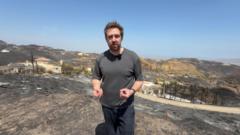
Widespread Destruction Engulfs Southern Spain
Recent wildfires have caused extensive damage across southern Spain, particularly impacting the Almería province. The village of Bédar has been identified as a focal point of the destruction, with reports indicating widespread charring and significant loss of property. The blazes, which began to spread rapidly on Thursday, have necessitated a substantial response from emergency services.
The Scope of the Disaster
Authorities have reported that the fires have consumed approximately 6,600 hectares (16,300 acres) of land. This figure underscores the immense scale of the environmental impact. The rapid progression of the fires presented considerable challenges for containment efforts, leading to a landscape described as a "sea of black" in affected areas. The human toll has also been tragic, with 12 fatalities confirmed as a direct result of the wildfires.
"This landscape is completely charred," observed a reporter from the BBC, describing the scene in Bédar where homes have been razed to the ground.
Emergency Response and Ongoing Efforts
Hundreds of firefighters have been deployed to combat the blazes, working tirelessly to bring the inferno under control and prevent further spread. Their efforts have been crucial in mitigating an even greater catastrophe. The coordinated response involves various agencies and personnel, all striving to protect communities and natural habitats from the advancing flames. The challenging conditions, exacerbated by the intense heat, have made their task particularly arduous.
Climatic Factors Contributing to the Crisis
The current wildfire crisis in southern Spain is part of a broader pattern affecting Southern Europe this summer. A sustained heatwave, characterized by temperatures consistently reaching around 40 degrees Celsius (104 degrees Fahrenheit), has created exceptionally dry conditions. These high temperatures and arid environments provide ideal circumstances for wildfires to ignite and spread rapidly. Regions such as France and Portugal have also experienced significant wildfire activity, highlighting a regional vulnerability to such events during periods of extreme heat.
Impact on Local Communities
For residents of villages like Bédar, the wildfires represent an immense personal tragedy. The loss of homes, livelihoods, and the natural environment has a profound and lasting impact. Many individuals have been displaced, and the process of recovery and rebuilding is expected to be extensive and challenging. The psychological toll on those who have witnessed the destruction firsthand is also considerable, as communities grapple with the aftermath of such a devastating event.
Environmental Consequences
Beyond the immediate destruction of property, the wildfires have severe environmental consequences. The burning of thousands of hectares of land leads to significant habitat loss for wildlife, soil degradation, and increased air pollution. The long-term ecological recovery of these areas can take many years, affecting biodiversity and ecosystem stability. Efforts to reforest and rehabilitate the land will be critical in the coming months and years.
Looking Ahead: Prevention and Preparedness
The recurring nature of severe wildfires in Southern Europe underscores the importance of robust prevention strategies and enhanced preparedness measures. This includes improved forest management, early warning systems, and public education campaigns on fire safety. As climate patterns continue to evolve, adapting to more frequent and intense heatwaves and associated fire risks will be a critical challenge for regional authorities and communities.
The events in Bédar serve as a stark reminder of the destructive power of wildfires and the urgent need for comprehensive approaches to address this growing environmental and humanitarian crisis.
Source: BBC News