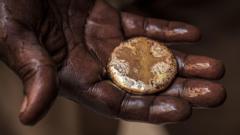
European Union Targets Sudanese Gold Trade to Curtail Conflict Funding
The European Union (EU) has officially prohibited the purchase, import, and transfer of gold originating from Sudan. This decisive action comes as the international community seeks to undermine the financial foundations of the protracted civil war that erupted in Sudan in April 2023. According to EU officials, the gold trade has emerged as a critical revenue stream sustaining the hostilities between the Sudanese Armed Forces (SAF) and the paramilitary Rapid Support Forces (RSF).
Sudan, recognized as one of Africa's primary gold producers, possesses extensive gold reserves. These reserves have, regrettably, become a vital financial asset for both factions engaged in the conflict, as reported by various human rights organizations. The ongoing conflict has precipitated one of the most severe humanitarian crises globally, leading to the displacement of over 14 million individuals from their residences.
Comprehensive Sanctions Adopted by EU Foreign Ministers
In a coordinated effort to address the crisis, EU foreign ministers endorsed these new measures. Alongside the gold import ban, the EU has also imposed restrictions on the export of mercury and cyanide to Sudan. These chemicals are extensively utilized in gold mining operations, and their restricted supply is intended to further impede the warring parties' ability to extract and process gold.
The EU Council articulated its rationale in a statement, asserting that "Gold has become a key source of revenue sustaining the conflict in Sudan." The Council further clarified that the ban and associated restrictions are specifically designed to "reduce the resources" available to those perpetuating the violence. "The measures are designed to curb sources of financing for the conflict and further increase pressure on those fuelling the war," the statement emphasized.
Understanding the Illicit Gold Trade Network
Analysis by United Nations experts and other analysts indicates that a substantial portion of Sudan's gold production, estimated to be more than 50% and potentially as high as 70%, is illegally trafficked out of the country annually. The Rapid Support Forces (RSF) reportedly control the majority of goldfields situated in Darfur and Kordofan, regions located in the western and central parts of Sudan. Conversely, the Sudanese army oversees gold production in the northern and eastern areas of the nation.
The illicitly obtained gold frequently traverses through neighboring countries such as Egypt, Chad, and Libya. Its ultimate destination is often Dubai in the United Arab Emirates (UAE), which serves as a major global hub for gold refining and trade. This intricate network of smuggling routes complicates efforts to regulate and monitor the flow of Sudanese gold.
Scope of the Restrictive Measures
Under the recently implemented restrictive measures, individuals and companies within the European Union are expressly forbidden from purchasing, importing, or transporting gold that originates from Sudan. However, to mitigate potential humanitarian impacts, mercury and cyanide required for humanitarian and public health purposes are exempt from the EU's export ban. This exemption underscores the EU's commitment to avoiding unintended consequences that could exacerbate the already dire humanitarian situation.
These latest restrictions represent an expansion of an existing, broader EU sanctions framework. This regime has previously targeted specific individuals and entities identified as contributing to the escalation and continuation of the conflict in Sudan. The layered approach to sanctions aims to exert multifaceted pressure on the actors involved.
Challenges and Future Outlook for Sanctions Effectiveness
Despite the implementation of these robust sanctions, experts have voiced concerns regarding their standalone efficacy. They caution that sanctions alone may not be sufficient to completely halt the illicit gold trade. For these measures to be truly effective, major international gold trading centers and regional transit routes must also enhance their enforcement efforts against illegally sourced Sudanese gold.
There is increasing international pressure on the various external backers of the conflict to withdraw their support. This urgency is amplified by the dire humanitarian situation, with aid agencies estimating that over 28 million people in Sudan are currently experiencing acute hunger. The confluence of diplomatic pressure, targeted sanctions, and a concerted effort to disrupt illicit trade networks is deemed crucial for fostering a path towards peace and stability in the war-torn nation.
Source: EU bans gold imports from Sudan to curb money financing the war