Sam Neill: A Career Defined by Versatility, Not Just Dinosaurs
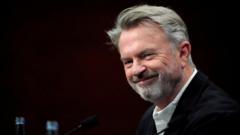
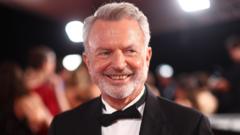
The passing of Sam Neill at the age of 78 marks the end of an era for a distinguished actor whose career spanned over five decades. While he gained international recognition for his portrayal of palaeontologist Dr. Alan Grant in the 1993 blockbuster Jurassic Park, and later reprised the role in the Jurassic World series, Neill's work showcased a remarkable breadth and depth that transcended this iconic franchise. His filmography reflects a commitment to diverse roles, encompassing everything from major Hollywood productions to independent arthouse cinema.
Neill's rise to global fame was somewhat unconventional, occurring relatively later in his career. By the time Jurassic Park premiered, he was 43 and had already established a significant body of work, hinting at the versatility that would come to define him.
Early Life and Unconventional Path to Acting
Born Nigel Neill in 1947 in Northern Ireland, where his father served with the Royal Irish Fusiliers, Neill's early years were shaped by his family's relocation to New Zealand when he was seven. He adopted the name Sam to differentiate himself from other Nigels at his new school, a decision he later humorously remarked upon, stating that being christened Nigel had 'set me back for years.'
Neill's initial career aspirations were varied and uncertain. He considered paths outside of acting, including following his father into the military or joining the family's hospitality business. A brief foray into law school proved unsuccessful, leading him to explore his passion for performance. Having participated in student theatrical productions of Shakespeare, Neill ultimately decided to pursue acting professionally.
His early career saw him gain recognition in New Zealand, notably with a role in 1977's Sleeping Dogs. A move to Australia further propelled his career, with the 1979 film My Brilliant Career proving to be a pivotal moment. Neill himself credited this role as transformative, enabling him to work and live in Australia, a place he deeply cherished.
Pre-Jurassic Park Triumphs and Acclaim
Before his encounter with dinosaurs, Neill built an impressive resume. Highlights include the 1981 cult horror film Possession and his critically acclaimed performance alongside Meryl Streep in 1988's A Cry in the Dark, for which he received the Australian Film Institute award for best lead actor. He also took on the chilling role of Damien Thorn in the supernatural horror Omen III: The Final Conflict in the early 1980s, filmed in the UK.
The year 1993 was significant for Neill, not only for Jurassic Park but also for his role in Jane Campion's acclaimed period drama The Piano. This film garnered the top prize at the Cannes Film Festival and went on to win three Academy Awards, further solidifying Neill's standing as a serious and capable actor.
However, it was Steven Spielberg's Jurassic Park that catapulted him to an unprecedented level of global stardom. The film's groundbreaking visual effects, particularly the realistic depiction of dinosaurs, captivated audiences worldwide. Grossing over $970 million, it briefly held the title of the highest-grossing film of all time. Neill expressed surprise at the film's overwhelming reception at its 1993 premiere, where he starred alongside Richard Attenborough and Laura Dern.
Beyond the Blockbuster: A Diverse Filmography
Neill's ability to command attention on screen, whether portraying resolute heroes or menacing villains, underscored his versatility. His post-Jurassic Park roles were equally diverse. He appeared in The Hunt For Red October, playing Sir Sean Connery's second-in-command, and in Dead Calm opposite Nicole Kidman. Other notable credits include Perfect Strangers, Bicentennial Man with Robin Williams, and more recently, fellow New Zealander Taika Waititi's 2016 hit Hunt for the Wilderpeople. This collaboration with Waititi led to cameo appearances in the Marvel Cinematic Universe films Thor: Ragnarok (2017) and Thor: Love and Thunder (2022). He also starred in Blackbird alongside Susan Sarandon and Kate Winslet, a film that ignited discussions about assisted dying.
Neill also returned to his roots, albeit with a humorous challenge, when he was cast as a Belfast police chief in the BBC series Peaky Blinders in 2013. Despite his Northern Irish birthplace, his childhood accent had faded, requiring assistance from actors James Nesbitt and Liam Neeson to re-learn it for the role, a fact he playfully attributed to their influence.
Battling Illness and Reflecting on Life
In March 2022, Neill was diagnosed with non-Hodgkin lymphoma, a type of blood cancer. This diagnosis prompted him to 'take stock of things,' and during a period of inability to work, he turned to writing. He shared that this creative outlet provided him with a purpose each day. A year later, his collection of stories evolved into an autobiography titled Did I Ever Tell You This?, which explored his career and health journey. Neill emphasized that it was not a 'cancer book,' stating, 'The last thing I want is for people to obsess about the cancer thing, because I'm not really interested in cancer, I'm not really interested in anything other than living.'
His memoir also revealed a surprising anecdote: an audition for James Bond, a role he claimed he never truly desired. He recounted feeling 'entirely foolish' during the audition, arranged by his agent, and expressed his contentment with a life free from the intense scrutiny that comes with such a high-profile role. He valued his privacy, noting, 'I can get a coffee in the morning and no-one bothers me and I think that's completely priceless. So, my life is my own.'
In 2022, Neill accepted a knighthood from New Zealand, an honor he had previously declined. He candidly explained that his cancer diagnosis influenced his change of heart, humorously remarking, 'Then when I thought I was dying a couple of years ago, I thought, 'Oh bugger it, I may as well go out with the title,' so I changed my mind.'
New Zealand Prime Minister Christopher Luxon lauded Neill as 'one of the greats,' acknowledging his instrumental role in shaping the country's film industry. Luxon stated, 'He started out when there was barely a film industry in this country to speak of. For more than 50 years he took New Zealand stories to the world and his talents helped make our film industry into what it is today – one of our greatest cultural exports.'
Source: BBC News