Yellowstone Tourist Injured in Bison Encounter
A recent incident at Yellowstone National Park saw a 65-year-old man, identified by US media as Carl Isom-McDaniel, suffer multiple injuries after being charged and gored by a bison. The event, which occurred near Yellowstone Lake, was captured on video and subsequently circulated online, drawing attention to the park's wildlife safety guidelines.
Details of the Incident
The encounter took place on a Friday evening at the Bridge Bay Campground as dusk approached. Video footage depicts Isom-McDaniel and his grandson initially observing a bison, reportedly weighing approximately 2,000 pounds (900 kg), from a distance. As they paused to take a photograph, the animal, which had been lying in the grass, abruptly rose and began to move towards them.
Witnesses described the bison exhibiting agitated behavior, repeatedly flopping on its side before standing up. A white truck attempted to intervene by slowly approaching the scene, but the bison charged the vehicle, causing the driver to accelerate away. The animal then continued its pursuit of Isom-McDaniel and his grandson, who attempted to seek refuge by running through a cluster of trees.
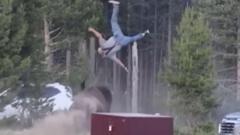
Despite their efforts, the bison eventually reached Isom-McDaniel. Mike Macleod, who recorded the incident, recounted to the Cowboy State Daily that the bison used its left horn to hook Isom-McDaniel on his hip, tossing him into the air. Macleod noted that the man performed a "perfect flip" before landing on his side. He further stated that Isom-McDaniel was conscious throughout the ordeal, despite being in significant pain, particularly in his leg, and even managed to make jokes.
Following the attack, Isom-McDaniel was transported to a hospital for his injuries. The National Park Service (NPS) has not yet released official information regarding the incident, and the BBC's request for comment from the NPS remained unanswered at the time of reporting.
Bison Behavior and Park Safety Guidelines
The National Park Service consistently warns visitors about the potential dangers posed by bison, despite their often tranquil appearance. The NPS website states, "Bison may appear tranquil, but these large animals have injured more people in Yellowstone than any other animal." It further emphasizes their speed, noting that they "can run 3x faster than humans, making it very important to give them plenty of space."
The park's official guidelines advise visitors to maintain a minimum distance of 25 yards (23 meters) from bison at all times. A critical admonition is to "never approach a bison to take a photo," a warning that resonates with the circumstances of this recent incident.
Seasonal Considerations and Expert Commentary
Yellowstone National Park experiences its peak visitation during the summer months, with nearly 60% of annual visitors arriving between June and August. This period coincides with the bison's mating season, also known as the "peak breeding" period, when bull bison exhibit heightened testosterone levels.
Jennifer Barfield, the scientific lead at Colorado's Laramie Foothills Bison Conservation Herd, explained that this increase in hormones significantly influences their behavior, making them potentially more unpredictable than at other times of the year. Barfield, a professor at Colorado State University, noted that her team avoids close proximity to bison during the mating season, opting instead to make observations from the safety of a vehicle.
She reiterated the importance of adhering to the 25-yard minimum distance, especially for those on foot, emphasizing it as a crucial safety measure. The unpredictable nature of these large animals, particularly during their breeding season, underscores the necessity for visitors to exercise caution and respect wildlife boundaries to prevent similar incidents.
Source: Bison rams grandfather in Yellowstone Park, knocking him metres into the air